How to Sell Handloom and Handicraft Products Online in India

India’s handloom and handicraft sector is one of the largest in the world, employing millions of weavers, artisans, and craft workers across every state. Yet for most small producers, reaching buyers beyond the local market has always been the hardest part of the work. The product quality is rarely the issue. The gap is almost always distribution.
That gap has narrowed considerably in recent years. Selling handloom sarees, pottery, block-printed textiles, bamboo products, or any traditional craft online is now genuinely possible for individual artisans and small collectives without needing a tech background or a large budget. Platforms like Boomimart make it possible to set up a fully functional online store within hours, complete with payment integration, catalogue management, and order tracking. This guide walks through the entire process from deciding what to sell and how to present it, to managing logistics and building repeat buyers.
Why Handloom and Handicraft Sellers Have a Real Opportunity Online
Urban Indian buyers are increasingly drawn to authentic, handmade products with a story behind them. The rise of conscious consumption, growing disillusionment with mass-produced goods, and a genuine appreciation for craft traditions have created strong demand for artisan products online. Categories like handwoven sarees, Madhubani art, Kondapalli toys, Dokra metalwork, and hand-block printed fabrics sell consistently on direct-to-consumer channels when they are presented well.
The advantage of selling through your own online store rather than a marketplace is significant. On Amazon or Flipkart, you compete on price, lose brand identity, and pay substantial commissions. With your own storefront, you set the narrative, build a loyal buyer base, and keep more of what you earn. For artisan sellers, the story behind the product is often as valuable as the product itself, and a direct channel is the only way to tell that story on your own terms.
Ready to launch your craft store?
Step 1: Decide What You Will Sell and Who You Are Selling To
Before setting up any online store, spend time getting clear on your product range and your target buyer. This is not a complicated exercise, but skipping it leads to a store that tries to say everything and ends up communicating nothing.
Handloom and handicraft products attract several distinct buyer types. Festival and gifting buyers look for premium, ready-to-gift products around Diwali, Pongal, weddings, and corporate gifting seasons. Everyday wear buyers are looking for handloom cotton sarees, dupattas, and kurta fabrics for regular use. Decor buyers want handmade pottery, wall hangings, brass items, and terracotta pieces for home styling. Export or NRI buyers are often looking for authentic Indian craft products that are difficult to find outside India.
Knowing which of these buyers you are primarily speaking to shapes everything from your product photography and pricing to how you write your product descriptions.
Step 2: Set Up Your Online Store the Right Way
Setting up your store on Boomimart requires no coding knowledge. Once registered, you can add your brand name, upload a logo, and configure your store’s appearance within your dashboard. The most important step at this stage is creating clean, well-organised product categories. For a handloom seller, typical categories might include sarees, dress materials, stoles and dupattas, home textiles, and gift sets. For a handicraft seller, categories might be pottery, metalwork, paintings, wooden crafts, and jewellery.
Keep your categories simple. Buyers scan, they do not read. A store with six clear categories is far easier to navigate than one with twenty overlapping subcategories.
Step 3: Product Photography That Does the Work for You
Photography is where most artisan sellers lose sales without realising it. A product that looks beautiful in person can appear dull in a poorly lit photograph taken on a cluttered background. For handloom and textile products, the texture, weave, and colour accuracy are what buyers are paying attention to. Your photographs need to capture all three.
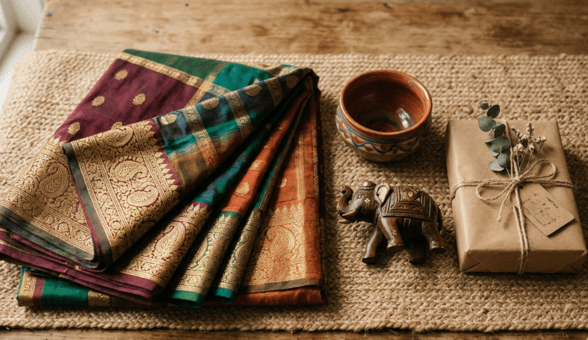
Natural daylight is your best friend. Shoot near a large window between 9 AM and 12 PM when the light is soft and directional. Lay the saree or fabric flat on a clean white or neutral surface for flat-lay shots. Also include a drape shot or a worn photo if possible, since buyers need to visualise how the product looks in use. For handicraft items like pottery or wooden toys, shoot against a plain background and include at least one close-up to show texture and craftsmanship.
| Product Type | Best Shot Style | Key Detail to Capture |
| Handloom sarees | Flat lay + drape shot | Weave texture, border detail |
| Block print fabric | Flat lay close-up | Print clarity, colour accuracy |
| Pottery and ceramics | Styled with neutral props | Glaze finish, shape |
| Wooden handicrafts | Plain white background | Carving detail, finish |
| Paintings and art | Straight-on, even lighting | Colour fidelity, brush detail |
Step 4: Writing Product Descriptions That Sell
A handloom or handicraft product description needs to do two things at once: tell the story of the product and give the buyer the practical information they need to make a purchase decision. Most artisan sellers either over-romanticise the description without giving any specifications, or list specifications without any context that makes the buyer care.
A good structure for a craft product description starts with one or two sentences about the origin or craft technique. Then it covers material, dimensions or weight, wash or care instructions, and any certification or GI tag the product carries. End with a line about what occasion or use it suits best. This combination of story and specification builds both trust and desire.
For guidance on how product titles and descriptions affect search visibility, Search Engine Land covers e-commerce SEO practices extensively. Clear, keyword-aware titles like ‘Handwoven Pochampally Ikat Silk Saree – Navy and Gold’ perform significantly better in search than vague titles like ‘Beautiful Silk Saree.’
Ready to launch your craft store?
Step 5: Pricing Your Handloom and Craft Products Fairly
Pricing is one of the biggest challenges for artisan sellers, and the most common mistake is underpricing. The instinct to price low to attract buyers often backfires because it signals low quality rather than good value. Buyers of handloom and handmade products expect to pay a premium over mass-produced alternatives. They are paying for authenticity, craftsmanship, and story.
A workable pricing formula for artisan products covers raw material cost, labour time at a fair hourly rate, overhead (packaging, shipping, platform fees), a profit margin, and a buffer for returns or damaged goods. Do not base your price on what the cheapest listing on a marketplace charges. That race leads nowhere good for anyone in the craft ecosystem.
| Pricing Component | What to Include |
| Material cost | Raw fabric, dye, clay, wood, etc. |
| Labour | Hours spent at a fair daily wage |
| Overhead | Packaging, shipping, platform fee |
| Profit margin | Minimum 20 to 30 percent |
| Buffer | 5 to 10 percent for returns or damage |
Step 6: Packaging and the Unboxing Experience
For handloom and handicraft products, packaging is not just protection. It is part of the product experience. Buyers who receive a handwoven saree in a simple polybag feel very differently about their purchase compared to receiving it in a folded fabric pouch with a small note about the weaver who made it. The latter builds loyalty and generates word-of-mouth sharing.
You do not need expensive packaging to create a good unboxing experience. Recycled kraft paper wrapping, a simple cotton drawstring bag, a small printed card with the craft story, and a thank-you note are enough to make the delivery feel considered and premium. This matters especially for gifting buyers who are likely to repeat purchase or refer others if the first experience exceeds expectations.
Step 7: Managing Orders and Logistics Without Overwhelm
One of the most common reasons artisan sellers stop selling online is that order management becomes chaotic as volume grows. Boomimart’s store management tools keep orders, inventory, and shipping status in one dashboard, reducing the manual tracking that tends to break down when you are managing both production and fulfilment simultaneously.
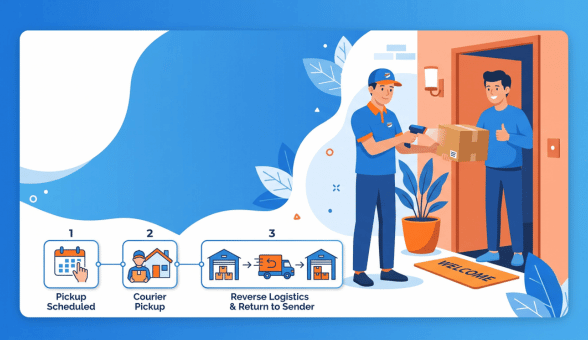
For shipping, courier aggregators like Shiprocket and Delhivery give small sellers access to negotiated rates across multiple courier partners. Ship products within 24 to 48 hours of order confirmation whenever possible. For fragile items like pottery or glasswork, double-box packaging and foam inserts are worth the added cost to avoid breakage and the resulting negative reviews.
Being upfront about production timelines also helps. If a product is made-to-order and requires five days to produce, say so clearly on the product page. Buyers who know what to expect are far more patient than buyers who assumed something would ship immediately.