How to Launch Your First Online Store in India Without Technical Knowledge

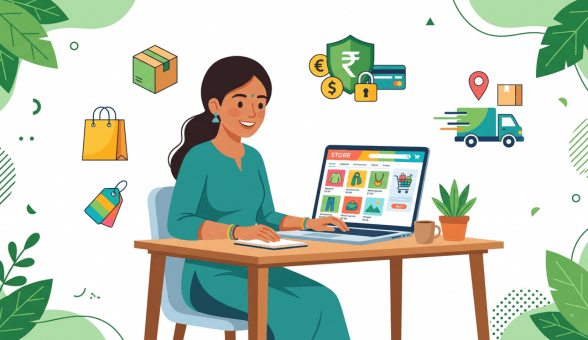
Selling online in India has never been more accessible, yet most first-time entrepreneurs still believe they need a developer, a technical co-founder, or months of learning before they can open a store. That assumption is holding back a lot of genuinely good businesses from reaching buyers who are ready to purchase.
This guide is for anyone who wants to launch their first online store in India without any coding background, without hiring a developer for the basics, and without getting buried in platform complexity before making a single sale.
The First Decision: Platform vs Custom Build
Before anything else, new sellers face this question: should I build a store on an existing platform or have someone build one from scratch for me? For a first store, the answer is almost always platform. Custom builds require ongoing developer support, cost significantly more upfront, and take weeks to get live. A good e-commerce platform gets you selling in a day.
Platforms like Boomimart are designed specifically for Indian D2C sellers and handle payment gateway integrations, GST-ready billing, and mobile-optimised storefronts out of the box. You focus on your products; the platform handles the infrastructure.
What You Need Before You Set Up the Store
Having the right information ready before you start saves a significant amount of back-and-forth later. You do not need everything to be perfect before you launch, but you do need a few basics in place.
| What You Need | Why It Matters |
| Product photos (at least 2 to 3 per product) | Buyers cannot touch or try your product; good images close the gap |
| A short product description for each item | Helps with both search discovery and buyer confidence |
| Your bank account details | Required to receive payouts from your payment gateway |
| A GST number (if applicable) | Mandatory if your annual turnover exceeds Rs 40 lakh |
| A contact number and email for customer queries | Builds trust and is required for most platform signups |
Many first-time sellers try to get every product photographed perfectly before launching. A better approach is to go live with your best five to ten products and add more over time. Done is better than perfect, especially in the early days.
Launch your online store today
Setting Up Your Store: What Each Section Actually Means
Most e-commerce platforms use similar language across their setup process. Here is a plain-language breakdown of what each section actually asks for and what you should put there.
Store Name and Domain
Your store name is what customers will see and remember. Keep it short, easy to pronounce, and relevant to what you sell. Your domain is the web address (like yourstore.com or yourstore.boomimart.com). If you are starting out, a subdomain on a trusted platform is perfectly fine and saves you the hassle of separate domain management.
Product Listings
Each product needs a title, description, price, and at least one image. Write your product titles the way a customer would search for them. If you sell handmade brass diyas, your title should include terms like brass diya, pooja lamp, or traditional oil lamp depending on who your buyers are. Keep descriptions factual and benefit-focused rather than writing marketing copy nobody reads.
Payment Gateway
This is where Indian sellers often get stuck. You need a payment gateway to accept online payments. Most platforms in India come pre-integrated with options like Razorpay, PayU, or Cashfree. Completing the gateway KYC process usually takes one to two business days. Until it is live, you can display your store but not accept live payments.
Shipping Settings
Decide how you will handle shipping before your first order arrives. Options include partnering with a courier aggregator like Shiprocket or Delhivery, shipping directly through India Post for lower volumes, or offering local pickup if you serve a specific geography.
The Mistakes First-Time Indian Online Sellers Make Most Often
Launching a store is one thing. Getting it to actually work is another. Most first-time sellers make a handful of predictable errors that slow down their early growth.
- Using blurry or over-filtered product images that do not show the actual product clearly
- Writing product descriptions that are copied from supplier catalogues and filled with jargon
- Setting shipping rates too low and absorbing losses on every order
- Not testing the checkout flow on a mobile device before going live
- Ignoring the About page, which many buyers check before trusting a new seller
Resources like Google for India have consistently shown that mobile-first trust signals are particularly important for Indian buyers who are discovering a brand for the first time.
Launch your online store today
After Launch: The First 30 Days
Going live is a milestone, not an endpoint. The first 30 days after launch are about observation more than optimisation. Watch which products attract the most attention, where visitors drop off in your checkout flow, and what questions your customers are asking before they buy.
Do not chase paid advertising in week one. Focus first on sharing your store with your existing network, asking for your first five reviews, and fixing anything in the buyer experience that feels confusing or incomplete.
If you sell food, organic products, or handmade goods, platforms like Ulamart offer a ready audience of buyers already searching for those product categories. Cross-listing on a vertical marketplace while maintaining your own store gives you both brand independence and buyer discovery in parallel.
Your first store does not need to be your best store. It needs to be live, honest, and consistent. The sellers who grow fastest are not the ones who launched with the most polished setup. They are the ones who launched early, listened to their buyers, and kept improving.