Simplifying Return Pickups: Reducing Reverse Logistics Costs

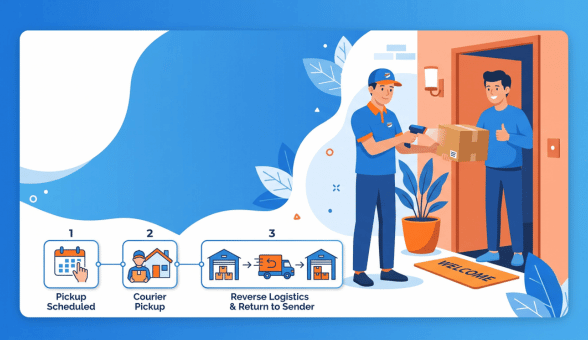
Reverse logistics quietly becomes one of the more expensive parts of running an online store as order volume grows, and return pickups are usually where the inefficiency hides. Most SMB sellers focus heavily on optimising outbound shipping cost while treating returns as an unavoidable expense to absorb rather than a process that can actually be streamlined the same way outbound fulfillment is.
Why Return Pickups Cost More Than They Should
A large share of reverse logistics cost comes from failed or rescheduled pickup attempts, not the actual courier fee for a successful pickup. A courier partner arriving when the customer is unavailable, or when the item is not packed and ready, triggers a second attempt, doubling the cost for that single return. Reducing failed pickup attempts is often a bigger lever on total reverse logistics cost than negotiating a better base rate with your courier partner.
Giving Customers Real Control Over Pickup Timing
Rigid pickup windows set by the courier partner, without customer input, are a common cause of failed attempts. Allowing customers to select or confirm a pickup time slot within the return flow, rather than a courier showing up unannounced within a broad window, meaningfully reduces missed pickups. This does add a small amount of complexity to the return workflow but pays for itself quickly through fewer failed attempts.
| Return Process Element | Common Inefficiency | Improvement |
| Pickup Scheduling | Fixed courier window, no customer input | Let customer select or confirm a time slot |
| Packaging Instructions | Assumed customer knows how to repack | Clear, simple repacking instructions in the return flow |
| Pickup Confirmation | No reminder before pickup day | Automated reminder a day before scheduled pickup |
Clear Repackaging Instructions Reduce Rejected Returns
A return that arrives improperly packed can be rejected at the warehouse, triggering a second round trip that adds cost without resolving anything. Including clear, simple repackaging instructions at the point the return is initiated, not buried in a policy page the customer has to search for, reduces this failure point. A short checklist with a photo example of correctly packed returns is often enough to meaningfully cut rejection rates.
Automated Reminders Before Pickup Day
A simple automated reminder sent a day before a scheduled pickup, prompting the customer to have the item packed and ready, catches a surprising number of otherwise avoidable failed attempts. This is a low cost addition to the return workflow that most SMB sellers have not implemented yet, largely because it requires connecting the return scheduling system to a notification trigger, which is a modest technical lift for a meaningful cost reduction.
- Track failed pickup attempts as a specific metric, not just total return volume
- Let customers choose or confirm their own pickup time slot where your courier partner supports it
- Include clear repackaging instructions with a visual example at the point of return initiation
- Add an automated reminder the day before a scheduled pickup to reduce no-shows
See Our Returns Automation Tools
Reviewing Courier Performance by Failed Attempt Rate
Beyond process changes on your end, it is worth reviewing whether your courier partner’s failed pickup rate is in line with industry norms, since some partners consistently perform worse in this specific metric even with identical customer behaviour. Comparing failed attempt rates across courier partners, not just base pricing, gives a more complete picture of true reverse logistics cost.
If reducing reverse logistics cost is a priority for your operation, our platform pricing and operations features include return workflow automation, and our team can walk through your current failed pickup rate during a product demo to identify where the biggest savings are likely to come from.