
Food Labeling Compliance for D2C Food Brands in India

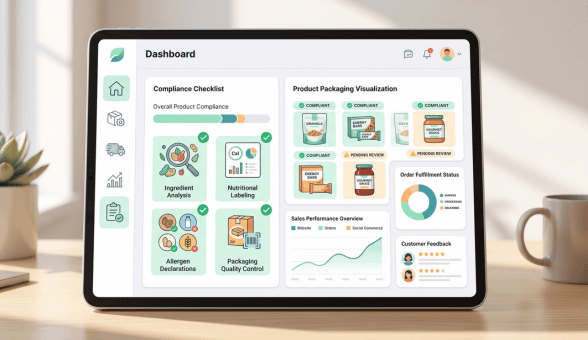
Food labeling compliance is one of the areas where D2C food founders most commonly underestimate the regulatory detail involved, treating it as a design task rather than a legal one. FSSAI requirements are specific about what must appear on packaging, and getting this wrong can mean anything from a compliance notice to a product recall, both of which are far more expensive than getting the label right the first time.
What FSSAI Requires on Every Label
| Required Element | Detail |
|---|---|
| FSSAI license number | Must be printed clearly, along with the logo where applicable |
| Ingredient list | In descending order by weight, including allergen declarations |
| Nutritional information | Per serving and per 100g/100ml, following FSSAI’s specified format |
| Net quantity, batch number, manufacture and expiry dates | Must be printed in the specified font size and format |
Common Compliance Gaps for New D2C Brands
New food brands most often stumble on allergen declarations and nutritional panel formatting, both areas where the specific FSSAI format differs from generic nutrition label templates found online. Another frequent gap is claims language: terms like natural, organic, or healthy carry specific regulatory meaning under FSSAI rules, and using them without meeting the underlying criteria is a common source of compliance action, not just a marketing risk.
Avoiding Food Adulteration Claims Issues
- Do not claim a product is preservative-free unless verified, since even naturally occurring preservative compounds in some ingredients can trigger this claim’s scrutiny.
- Be precise with organic claims, which require certification under India’s organic certification framework, not just a marketing description.
- Match ingredient list order to actual composition by weight, a common shortcut that skips proper verification and creates compliance risk.
- Keep allergen warnings current as recipes change, since a formulation update that isn’t reflected in labeling is a frequent, avoidable violation.
Building a Labeling Review Process
| Stage | What to Check |
|---|---|
| Before first production run | Full FSSAI format compliance review, including allergen and nutritional panels |
| Any recipe or ingredient change | Re-verify ingredient list order and allergen declarations |
| Before any new packaging batch | Confirm current FSSAI license number and expiry-date format are correct |
Founders launching on a D2C platform often assume the storefront handles compliance, but labeling accuracy is entirely the brand’s responsibility, not the platform’s. Boomimart’s pricing and platform plans support product listings with detailed nutritional and ingredient fields, but the accuracy of what goes into those fields still rests with the brand’s own compliance review before products go live.
Working With a Compliance Consultant vs Doing It In-House
For brands launching their first product, a one-time consultation with an FSSAI compliance consultant to review label templates is often worth the cost, since it catches formatting and claim-language issues before they become recurring problems across every future SKU. Brands producing multiple SKUs with frequent recipe changes may find it more efficient to bring this expertise in-house or build a standard internal checklist based on that initial consultation.
Staying Current as Regulations Update
FSSAI labeling requirements are periodically revised, and a label that was compliant at launch can fall out of compliance without any change on the brand’s side if regulations shift. Subscribing to FSSAI’s official notification channels, or working with a consultant who tracks these updates, is a more reliable approach than assuming a label format stays valid indefinitely. For general background on how food labeling regulation works and why it exists, the Wikipedia entry on food labeling provides useful context, though FSSAI’s own official guidelines remain the authoritative source for Indian compliance specifics.