Store Uptime and Downtime: What Sellers Should Ask Before Choosing a Platform

Every ecommerce platform advertises a high uptime percentage, and on paper they all look reassuringly similar, 99.9 percent or better. What that number hides is more important than what it reveals. A seller comparing platforms needs to ask sharper questions than what the headline uptime figure is, because the real cost of downtime depends on when it happens, how it is communicated, and what recourse a seller has when it does.
Why the Headline Percentage Is Not Enough
A 99.9 percent uptime commitment still allows for roughly nine hours of downtime across a year, and that time is not guaranteed to be spread evenly or to fall outside peak selling hours. Two platforms with identical uptime percentages can have very different real world impact if one concentrates its downtime during routine maintenance windows and the other has unpredictable outages that happen to coincide with high traffic sale events.
Questions Worth Asking Before Signing Up
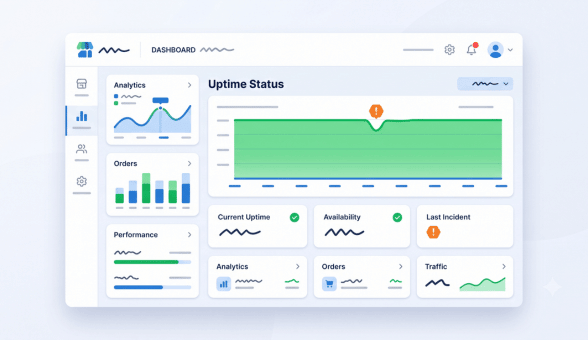
Beyond the percentage, ask whether the platform publishes a live status page showing real time incident history, since a platform confident in its reliability generally makes this information easy to find rather than something you have to request. Ask how downtime is communicated, whether sellers get proactive alerts or have to discover an outage themselves when orders stop coming in. And ask what compensation or service credit policy exists if downtime exceeds the stated commitment, since a policy with no consequence for the platform is effectively just a marketing number.
| Question | Why It Matters | Red Flag Answer |
| Is there a public status page? | Shows transparency and incident history | No public record of past outages |
| How is downtime communicated? | Determines how fast you can respond | You find out only when sales stop |
| Is there an SLA credit policy? | Gives the platform a real incentive | Uptime commitment has no consequence attached |
Timing of Downtime Matters More Than Frequency
A platform with slightly lower overall uptime but that schedules maintenance during predictable low traffic hours can be a better practical choice than one with a marginally higher percentage but unpredictable outage timing. Ask specifically how scheduled maintenance is handled and whether sellers get advance notice, since planned downtime you can prepare for is far less costly than an unannounced outage during a flash sale or a high traffic marketing push.
- Ask for real incident history, not just a headline uptime percentage
- Confirm whether maintenance windows are scheduled and communicated in advance
- Check if there is a service credit or compensation policy tied to downtime
- Consider how the platform’s traffic patterns from other sellers might affect shared infrastructure during peak periods
See Our Uptime Track Record
Weighing This Against Other Platform Factors
Uptime reliability should sit alongside, not above, other evaluation criteria like checkout speed, payment gateway reliability, and support responsiveness when something does go wrong. A platform with excellent uptime but slow support response during an actual incident does not necessarily serve a seller better than one with a slightly lower headline number but a fast, transparent incident response process.
If reliability is a top concern in your platform evaluation, our pricing and plan overview includes details on infrastructure and support response commitments, and our team is happy to walk through actual incident history during a product demo rather than just quoting a headline percentage.