Email vs WhatsApp vs SMS: Choosing the Right Channel for Each Message

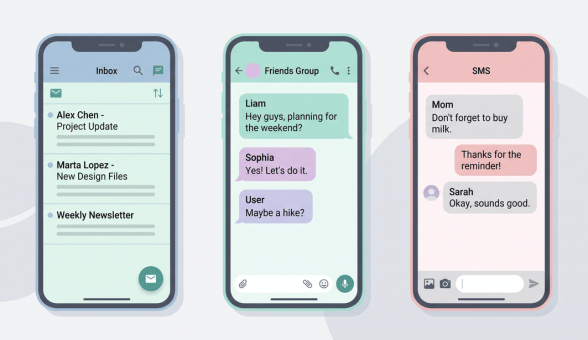
Most D2C brands run all three channels, email, WhatsApp, and SMS, but far fewer have a deliberate rule for which message type goes where. Defaulting to whichever channel is easiest to send from, rather than which one the message actually suits, quietly erodes open rates and, worse, trains customers to ignore your brand across every channel at once.
What Each Channel Is Actually Good At
Email handles long-form content well, detailed product launches, newsletters, and anything with multiple images or a longer narrative. It is also the most forgiving channel for frequency, since customers expect and tolerate a reasonable volume of email without feeling intruded upon. WhatsApp sits in a more personal, high-attention space, messages get read quickly, but the channel punishes overuse and generic, obviously mass-sent content far more harshly than email does. SMS is the most immediate and highest open-rate channel of the three, but it is also the most limited in format and the one customers are quickest to opt out of if used carelessly.
Channel Comparison by Message Type
| Message Type | Best Channel | Why |
| Order confirmation, shipping update | SMS or WhatsApp | Time-sensitive, needs immediate visibility |
| Product launch, newsletter | Long-form content, less time pressure | |
| Abandoned cart reminder | Personal feel, higher engagement than email |
Why WhatsApp Needs the Most Restraint
WhatsApp’s personal, conversational nature is exactly what makes it effective and exactly what makes it risky to overuse. A brand sending frequent, generic promotional blasts on WhatsApp burns through customer goodwill faster than the same volume on email, since the channel itself signals a more direct, personal line of communication. Reserving WhatsApp for higher-value, more personalized touchpoints, order updates, personalized recommendations, direct customer service, tends to preserve its effectiveness far longer than treating it as just another broadcast channel.
SMS: Short, Urgent, and Used Sparingly
SMS works best for genuinely time-sensitive information: order and delivery updates, OTPs, and flash sale alerts with a real deadline. Because SMS carries a per-message cost and a lower tolerance for frequency before customers opt out entirely, it should not be the default channel for routine marketing content that email or WhatsApp can handle just as effectively at lower cost and lower opt-out risk.
Build your channel strategy
Building a Simple Channel Decision Framework
- Is the message time-sensitive and does the customer need to see it within minutes? Use SMS or WhatsApp
- Is the message long-form or visually rich? Use email
- Is the message personal or conversational in tone? Use WhatsApp, sparingly
- Is the message a routine, lower-urgency update? Default to email over SMS to protect SMS opt-out rates
Measuring Whether the Mix Is Working
Tracking open and click rates separately by channel, rather than looking at a single blended marketing performance number, reveals which channel is actually driving engagement for which message type. A brand that sees WhatsApp engagement steadily declining despite strong email performance is often a sign of overuse on WhatsApp specifically, which is a much easier problem to diagnose and fix when channels are measured separately rather than combined into one overall metric.
Boomimart’s CRM and marketing automation resources cover how to set up channel-specific automation rules so each message type routes to its best-fit channel automatically, rather than relying on manual judgment call for every campaign.