How to Set Up Loyalty Programs That Bring Repeat Buyers Back

Getting a first order from a new customer is expensive. Getting a second order from the same customer usually costs a fraction of that, which is exactly why loyalty program ecommerce India setups have become such a common priority for growing D2C brands. A well built loyalty program does not need to be complicated. It needs to be simple enough for customers to understand at a glance and structured enough that it actually changes buying behaviour. This guide walks through choosing a model, setting one up, and measuring whether it is working, based on patterns Shopify’s own loyalty research and Indian D2C sellers both point to consistently.
Why Repeat Buyers Are Worth More Than New Ones
Repeat customers tend to spend more per order, convert faster since they already trust the brand, and cost far less to bring back than a new customer costs to acquire through ads. A loyalty program is one of the few retention tools that works quietly in the background, rewarding the behaviour a store already wants more of without needing a fresh campaign every time.
Choosing the Right Loyalty Model for Your Store
Most Indian D2C brands pick from three broad models. Points based programs reward every purchase with points redeemable later, tiered programs unlock better perks as customers spend more over time, and cashback or store credit models give a simpler, more immediate reward. The right choice depends on order frequency. A brand selling low-cost, frequently reordered products usually does better with simple points, while a higher-ticket brand with fewer but larger orders often gets more traction from tiers.
| Model | How It Works | Best For |
| Points based | Earn points per rupee spent, redeem later | Frequent, lower-ticket purchases |
| Tiered | Higher spend unlocks better perks | Higher-ticket, considered purchases |
| Cashback or credit | Instant reward applied to next order | Simpler stores, fast redemption |
Setting Up a Points Based Program Step by Step
Start by deciding what actions earn points, typically purchases, but also account creation, reviews, or referrals if you want broader engagement. Fix a simple point value, such as one point per rupee spent, and decide redemption thresholds that feel achievable within two or three typical orders rather than ten. Boomimart sellers can see how this maps onto their existing plan on the Boomimart pricing page, or walk through a live setup by requesting a Boomimart demo. For a deeper look at program structures beyond the basics covered here, the Boomimart guide on building a customer loyalty program is worth reading alongside this one.
Communicating the Program Without Overwhelming Customers
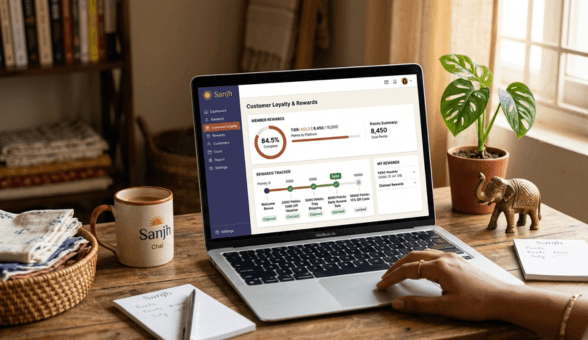
A loyalty program that customers cannot explain to a friend in one sentence is usually too complicated. Keep the earning and redemption rules to a single simple line on the product and cart pages, show a running points balance in the account dashboard, and mention the balance again in order confirmation emails. Avoid stacking too many bonus rules at launch. It is easier to add complexity later than to simplify a confusing program once customers are used to it.
Measuring Whether the Program Is Actually Working
A loyalty program is only worth the effort if it measurably changes repeat purchase behaviour. Track a small set of numbers rather than everything the dashboard offers, and revisit them monthly rather than daily, since loyalty effects show up over weeks, not days.
| Metric | What It Tells You |
| Repeat purchase rate | Whether customers are actually returning |
| Redemption rate | Whether rewards feel worth earning |
| Average order value of members | Whether the program lifts basket size |
| Time between first and second order | Whether the program shortens the gap |
Common Mistakes That Quietly Kill Loyalty Programs
The most common failure is launching a program and never mentioning it again, leaving it buried in a footer link nobody clicks. A close second is setting redemption thresholds so high that customers give up before reaching them. Rewards that feel token, such as a two rupee discount on a large order, rarely move behaviour either. A program built around one clear reward that customers actually want tends to outperform a complicated one with five reward types nobody remembers.